
 English
  Spanish
  Chinese
 You deserve a glamorous, sparkling smile that makes you excited to show off your pearly whites. But if you’re missing teeth, it’s natural to feel self-conscious. At our Beverly Hills dental office, we replace missing teeth with dental implants—today’s gold standard in tooth replacement. They offer a similar look and feel to natural teeth and are a great way to rejuvenate your overall appearance. But many patients hear that they don’t have enough jawbone to support implants. That might sound like a dead end, but it doesn’t have to be. In fact, we can solve this problem with bone grafting for dental implants.
As a pioneer in periodontics and cosmetic dentistry, Dr. Alex Farnoosh skillfully uses bone grafts to help you achieve a more youthful look with dental implants. His high success rate with this technique has helped many patients become eligible for implants when they previously thought it wasn’t possible.
What Is Bone Grafting?
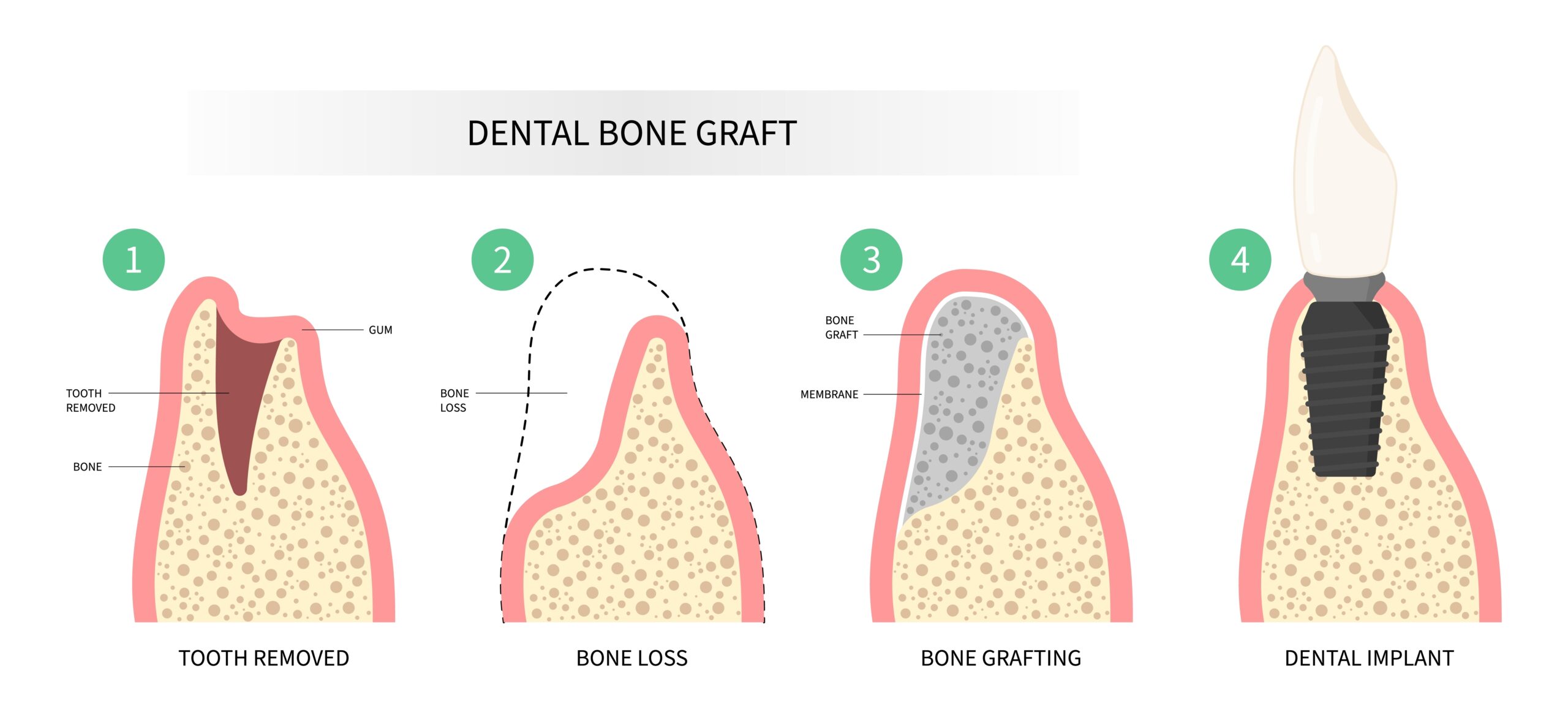 Bone grafting is a procedure where a dentist or surgeon places new bone material into an area where bone is missing or too weak. It’s similar to putting fresh soil in a garden where the ground has worn away. This step creates a solid base so something healthy can survive there again.
Dentists often use bone grafts to rebuild the jawbone when it has lost strength or size because of missing teeth. Without a tooth, the jawbone in that spot can shrink. A bone graft restores the bone, making it strong enough to hold a dental implant. This important step can help someone who was not a candidate for implants become ready for a healthy, complete smile.
Why You Might Need Bone Grafting for Dental Implants
It may come as a surprise that dentists need to perform bone grafting to make dental implants possible. But it’s normal for patients to lose bone after missing teeth or having teeth extracted.
Your teeth play a bigger role in maintaining your bone structure than you may realize. For instance, teeth help keep your jawbone strong and healthy by stimulating the bone as you bite and chew. The pressure that your roots transmit to your jawbone tells your body to keep reinforcing the bone in that area. When you lose teeth, you lose this stimulation, causing the bone to lose volume and strength. This process is called bone resorption.
Dental implants are an effective way to restore your smile after you lose teeth or have them extracted. But the longer you wait to replace missing teeth with an implant, the more your jawbone can shrink, making it harder to support a dental implant later on.
Thankfully, bone grafting helps strengthen and rebuild the bone, increasing your eligibility for implants.
An added bonus of restoring a missing tooth with dental implants is that it restores your bite force and prevents future bone loss. With implants, you can keep your jaw healthy and your appearance more youthful.
Bone Grafting for Dental Implants: A Case Study
To perform the bone grafting procedure, we first consider the material we’ll use for your situation. We can use your own bone, collected from your chin or jaw. Alternatively, we can use human bone from a bone bank. We might also consider using synthetic bone or bovine bone, which comes from cows. All of these bone grafting materials are highly regulated and effective.
To begin the procedure, Dr. Farnoosh will administer local anesthesia to numb the treatment area and keep you comfortable. Then, he makes an incision in the gums and packs the bone grafting material. He may use a titanium membrane to shape and secure the graft. This titanium membrane, also called a mesh or barrier, protects and stabilizes the graft while new bone grows. The final outcome is a stronger, healthier bone that’s ready to support a dental implant.
One Patient’s Experience
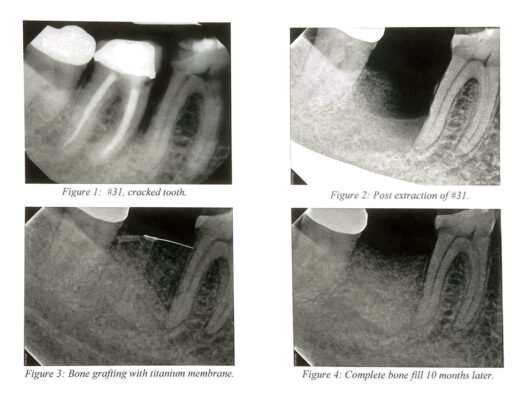
To better understand the process, let’s consider an example. The image here shows four dental X-rays, illustrating the bone grafting process for one of our patients.
This patient arrived at our office with a cracked tooth (Figure 1), specifically, a lower right molar (tooth #31). Unfortunately, the damage was extensive. Dr. Farnoosh determined that the best course of action was to extract the tooth and restore the bone with a graft.
Figure 2 shows the patient’s bone after Dr. Farnoosh extracted the tooth. The X-ray shows something really positive: a clean, strong socket with healthy bone walls still fully intact around the empty space.
The hole left behind is large and deep, but the surrounding bone is sharp-edged and undamaged. This indicates that Dr. Farnoosh removed the tooth gently without harming the jawbone.
This perfect setup made it easy to pack in bone graft material right away and cover it with a titanium mesh (Figure 3) to protect it while new bone grows in.
Figure 4 shows the result 10 months later: the socket is completely filled with solid new bone, making the patient a candidate for dental implants. Dr. Farnoosh can safely secure the implant into the bone, restoring the patient’s smile and preventing future bone loss.
Restore a Stunning Smile—Start With a Complimentary Consultation!
If missing teeth and jawbone loss have stood between you and the smile you want, there’s a real solution. Bone grafting can rebuild lost bone so that Dr. Farnoosh can place implants more successfully. This step not only makes dental implants possible when they otherwise wouldn’t be, but it also helps preserve your jaw and supports a healthier, more youthful appearance.
Dr. Farnoosh has helped many patients move from thinking implants weren’t an option to confidently enjoying restored function and confidence.
If you’re curious whether bone grafting could open the door to dental implants for you, we’re here to help. Schedule a complimentary consultation to learn more about your options for a beautiful, functional smile!